Why Balance Training Changed My Daily Moves Without Trying Hard
You don’t need flashy workouts to improve how your body works every day—better balance can start with simple, science-backed moves. I used to stumble on uneven sidewalks and feel wobbly standing on one leg. Then I learned balance isn’t just for athletes—it’s a core body function that declines with age. With small, consistent techniques rooted in neuroscience and biomechanics, I noticed real changes. This is how exercise reshaped my stability, naturally and effectively.
The Hidden Crisis of Poor Balance (And Why It Matters More Than You Think)
Beyond strength and endurance, balance is a fundamental pillar of physical function, yet it often goes unnoticed—until it fails. Balance is not simply about standing still; it is a dynamic process involving multiple systems working in harmony to keep the body upright and coordinated. It allows people to walk confidently, climb stairs safely, and respond to unexpected shifts in terrain. When balance weakens, even routine activities become risky. Tripping on a curb, misstepping on stairs, or feeling unsteady while reaching for a high shelf are not just minor inconveniences—they are early signs of a deeper issue affecting millions.
The human body maintains balance through a complex network of sensory inputs and motor responses. This system relies on three primary sources: the vestibular system in the inner ear, which detects head motion and spatial orientation; proprioception, the body’s ability to sense where its limbs are in space through feedback from muscles and joints; and visual input, which helps confirm the body’s position relative to the environment. When these signals align, the brain coordinates muscle activity to maintain equilibrium. However, modern lifestyles increasingly undermine this system. Prolonged sitting, reduced physical activity, and lack of varied movement limit the stimulation these systems need to stay sharp.
As a result, balance naturally declines over time, beginning as early as age 30. Research from the National Institute on Aging indicates that postural stability decreases by approximately 6% to 8% per decade after midlife. This gradual decline accelerates after age 60, increasing the risk of falls—a leading cause of injury among older adults. But poor balance is not an inevitable consequence of aging. It is a modifiable function, much like strength or flexibility. The real crisis lies not in the decline itself, but in the widespread lack of awareness and action. Most people do not realize their balance is deteriorating until a fall occurs, by which time the body has already lost critical neuromuscular coordination.
Everyday struggles reveal this hidden decline. Many report feeling less confident walking on gravel or grass, needing to hold railings more tightly on stairs, or experiencing dizziness when standing up too quickly. These are not isolated incidents—they reflect a broader pattern of diminishing stability. For family caregivers, active parents, or anyone managing household tasks, poor balance can translate into difficulty carrying laundry baskets, reduced confidence in crowded spaces, or hesitation during simple yard work. The emotional toll is equally real: a growing sense of fragility, fear of injury, or loss of independence. Yet, because balance operates silently in the background, it rarely receives the attention it deserves—until it fails.
How Science Explains Balance: Your Body’s Silent Coordination System
Understanding how balance works is the first step toward improving it. At its core, balance is a continuous conversation between the body and the brain. Three key systems—the vestibular system, proprioception, and vision—act as sensors, constantly sending updates about movement and position. The brain integrates this information in real time, making micro-adjustments in muscle tension and posture to keep the body stable. Think of it as a silent coordination system, always active, even when you’re not thinking about it. Like a well-tuned orchestra, each component plays a distinct role, and when one falls out of sync, the entire performance suffers.
The vestibular system, located in the inner ear, functions like a biological gyroscope. It contains fluid-filled canals and tiny crystals that shift in response to head motion, signaling whether you’re moving forward, tilting, or rotating. This system is crucial for maintaining orientation, especially when visual cues are limited—such as walking in dim light or turning your head quickly. Proprioception, often called the “sixth sense,” allows the body to know where its limbs are without looking. Nerve endings in muscles, tendons, and joints detect stretch, pressure, and joint angle, providing constant feedback. For example, when standing on one leg, proprioceptors in the ankle and foot automatically adjust muscle activity to prevent swaying. Vision supplements these inputs by offering a reference point—your eyes confirm whether the ground is level or if you’re leaning.
These three systems form a tripod of stability. If one leg weakens—say, due to inner ear issues, joint stiffness, or poor eyesight—the body becomes less stable. The brain compensates by relying more heavily on the remaining systems, but this increases cognitive load and reduces efficiency. Over time, without adequate challenge, the underused systems become even weaker, creating a cycle of decline. However, the good news is that this system is highly adaptable. Neuroplasticity—the brain’s ability to reorganize and strengthen neural pathways—allows balance to improve at any age. Studies published in the Journal of Neurophysiology show that targeted balance training enhances the brain’s integration of sensory signals, leading to faster and more accurate responses.
This adaptability means that balance is not a fixed trait but a skill that can be developed. Just as learning to ride a bike rewires the brain to coordinate movement, balance exercises train the nervous system to process and respond to instability more effectively. For instance, standing on one leg challenges the brain to refine proprioceptive feedback and suppress unnecessary sway. Over time, these small challenges lead to measurable improvements in postural control. The key is consistency and variety—repeating simple movements under slightly different conditions (such as closing the eyes or standing on a soft surface) forces the brain to adapt and strengthen its coordination. This scientific foundation underscores why balance training is not just for rehabilitation but for lifelong functional health.
Why Exercise Is the Most Proven Way to Boost Stability
While supplements, braces, or ergonomic aids may offer temporary support, exercise remains the most effective and scientifically supported method for improving balance. Unlike passive interventions, physical activity directly engages the neuromuscular system, stimulating the very mechanisms that govern stability. Clinical guidelines from the American Geriatrics Society and the Centers for Disease Control and Prevention consistently recommend exercise as the primary strategy for fall prevention. Research shows that structured balance training can reduce fall risk by up to 30% in older adults and improve postural control across all age groups. The reason is simple: balance is a skill, and like any skill, it improves with practice.
Exercise works because it challenges the body in a controlled way, prompting adaptation. When a person stands on one leg, the brain must coordinate muscle activation in the ankle, knee, and hip to maintain alignment. Over time, this repeated effort strengthens neural pathways, enhances muscle responsiveness, and improves coordination. Studies using electromyography (EMG) have demonstrated that individuals who engage in regular balance training develop faster muscle reaction times—critical for recovering from a stumble. Moreover, exercise builds strength in the lower limbs, particularly in the core, glutes, and calves, which are essential for maintaining an upright posture and controlling movement.
Passive approaches, such as taking supplements or using supportive devices, do not provide the same benefits. While vitamin D and calcium are important for bone health, they do not directly improve neuromuscular control. Similarly, wearing ankle braces may offer short-term stability but can lead to muscle atrophy if relied upon too heavily. In contrast, active training promotes long-term resilience by enhancing the body’s natural ability to respond to instability. Even brief daily sessions—just 10 to 15 minutes—can yield measurable improvements. A study published in the British Journal of Sports Medicine found that older adults who performed balance exercises five times a week for six weeks showed significant gains in single-leg stance time and functional mobility.
The beauty of balance training lies in its accessibility. It does not require a gym, special equipment, or intense effort. Simple movements like standing on one foot while brushing teeth, walking heel-to-toe down a hallway, or shifting weight from side to side can be integrated into daily routines. What matters most is consistency. The nervous system learns through repetition, and small, frequent challenges are more effective than occasional intense sessions. Over time, these micro-practices retrain the brain and body to work together more efficiently, leading to greater confidence and safety in everyday life. Exercise, in this sense, is not just about fitness—it is about reclaiming control over how the body moves through the world.
Foundational Techniques: The 4 Key Exercise Categories That Work
To build lasting balance, a well-rounded approach includes four science-backed categories: static balance, dynamic balance, strength integration, and reactive control. Each targets different aspects of stability, creating a comprehensive foundation. Static balance involves maintaining a steady position, such as standing on one leg or holding a tandem stance. This trains the body to control small shifts in weight and improves proprioceptive awareness. Dynamic balance focuses on movement, like walking heel-to-toe or stepping over imaginary lines, which enhances coordination during locomotion. Strength integration combines balance with resistance, such as performing a single-leg squat or standing on one leg while lifting a light weight. This builds the muscular support needed for stability. Finally, reactive control prepares the body to respond to unexpected disturbances, such as gentle nudges or stepping onto uneven surfaces, improving reaction time and fall recovery.
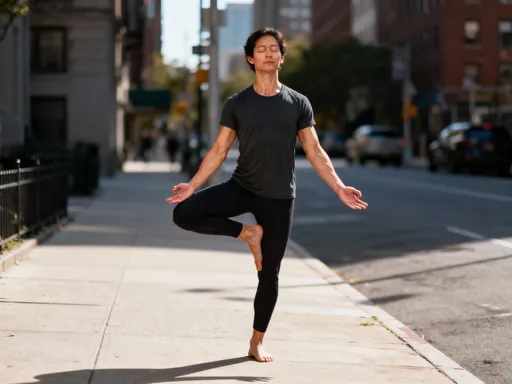
Static balance exercises are the starting point for most people. A simple single-leg stand—lifting one foot off the ground while keeping the knee slightly bent—challenges the ankle and hip stabilizers. Holding the position for 20 to 30 seconds on each side activates deep core muscles and sharpens joint feedback. To increase difficulty, one can close the eyes, reducing reliance on vision and forcing the vestibular and proprioceptive systems to work harder. Another effective static exercise is the tandem stance, where one foot is placed directly in front of the other, heel to toe. This narrows the base of support, making it harder to maintain balance and thus more effective for training.
Dynamic balance exercises introduce movement into the equation. The heel-to-toe walk, often used in sobriety tests, is a powerful tool for improving gait stability. Walking in a straight line with the heel of one foot touching the toe of the other requires precise coordination and engages the entire kinetic chain. Step-ups, side-stepping, and controlled lunges also fall into this category, helping the body adapt to changes in elevation and direction. These movements mimic real-life challenges, such as climbing stairs or stepping off a curb, making them highly functional.
Strength integration bridges the gap between balance and muscle power. A single-leg squat, even a partial one, demands both strength and control. It strengthens the quadriceps, glutes, and calves while challenging the body’s ability to stay upright on one leg. Similarly, standing on a foam pad while lifting a water bottle engages the core and shoulder stabilizers, promoting full-body coordination. Reactive control, though less common in home routines, is equally important. It can be practiced safely by gently shifting weight when someone lightly taps the shoulder or by stepping onto a folded towel to simulate an uneven surface. These exercises train the body to recover quickly from disturbances, a crucial skill for fall prevention. Together, these four categories create a balanced training program that builds resilience from multiple angles.
Putting It Into Practice: A Realistic Weekly Routine
Integrating balance training into daily life does not require hours of effort. A practical, five-day routine can deliver meaningful results without disrupting a busy schedule. The key is consistency, progression, and variety. Each session should last 10 to 15 minutes and include exercises from all four categories. Mornings are an ideal time, as the body is fresh and the mind is focused. Starting the day with a brief balance drill sets a tone of awareness and control that carries through daily activities.
A sample routine might begin with static balance: 30 seconds of single-leg standing on each side, followed by 30 seconds of tandem stance. This warms up the proprioceptive system and primes the nervous system for coordination. Next, dynamic balance can be practiced with a two-minute heel-to-toe walk down a hallway or along a taped line on the floor. Step-ups using a low stair or sturdy platform add movement and strength. For strength integration, perform 10 to 12 single-leg stands from a seated position (sit-to-stand on one leg) or hold a light weight at shoulder height while standing on one leg. Finish with reactive control by standing on a folded bath towel or foam pad and gently shifting weight side to side or front to back.
This routine can be repeated five days a week, with two rest days to allow for recovery. Beginners should start with easier variations—holding onto a countertop lightly if needed—and gradually reduce support as stability improves. Those with mobility concerns can perform seated balance exercises, such as lifting one leg while maintaining an upright posture or shifting weight from side to side in a chair. Progression is essential: once an exercise feels easy, increase the challenge by closing the eyes, using an unstable surface, or adding movement.
Tracking progress enhances motivation. A simple functional test—timing how long one can stand on one leg without support—can be done weekly. Most people see improvements within a few weeks. Other signs of progress include feeling more confident on stairs, reduced wobbling when turning, or greater ease when carrying items. The goal is not perfection but steady improvement. Over time, these small gains accumulate, leading to noticeable changes in daily life. The routine need not be rigid; it can be adapted to fit different environments, such as doing heel-to-toe walks in a grocery store aisle or practicing single-leg stands while waiting for the kettle to boil. The more seamlessly balance training is woven into everyday moments, the more sustainable it becomes.
Common Mistakes That Slow Progress (And How to Avoid Them)
Despite good intentions, many people unknowingly hinder their balance progress. One of the most common mistakes is over-relying on vision. While sight helps with orientation, depending on it too much prevents the vestibular and proprioceptive systems from strengthening. For example, always keeping eyes open during balance exercises limits the brain’s ability to adapt when visual cues are unavailable—such as in low light or when tripping. To counter this, incorporate brief periods of closed-eye practice. Start with just five seconds and gradually increase duration as confidence grows.
Another frequent error is holding onto furniture or walls for support. While this may feel safer, it reduces the challenge to the balance system. If the body is not required to stabilize itself, it will not adapt. Instead of gripping a countertop, try fingertip support—lightly touching a surface for minimal assistance—or standing within arm’s reach of a sturdy object for safety without constant contact. This allows the body to experience real instability while maintaining a safety net.
Skipping progression is another barrier to improvement. Doing the same easy exercise every day leads to plateaus. The nervous system adapts quickly, so challenges must evolve. Once a single-leg stand becomes easy, introduce a foam pad, close the eyes, or add arm movements. Without progression, gains stall. Poor form also undermines effectiveness. Common issues include locking the knees, hunching the shoulders, or letting the hips shift to one side. Maintaining proper alignment—ears over shoulders, shoulders over hips, hips over ankles—is essential for optimal training.
Impatience can also derail progress. Balance improvements are often subtle and gradual. People may expect dramatic changes in days, but real gains unfold over weeks and months. The key is persistence. Celebrate small victories—standing a few seconds longer, feeling steadier on stairs, or not needing to grab the railing. These quiet successes are signs of neural and muscular adaptation. By avoiding these common pitfalls and focusing on proper technique, consistency, and gradual challenge, individuals can maximize their progress and build lasting stability.
Beyond the Body: How Better Balance Enhances Everyday Life
The benefits of improved balance extend far beyond physical stability. They ripple into confidence, independence, and overall quality of life. When the body feels more secure, the mind follows. People report feeling more capable, less fearful, and more willing to engage in activities they once avoided. A simple walk in the park becomes enjoyable rather than anxiety-inducing. Carrying groceries up a flight of stairs no longer feels daunting. These small victories accumulate, restoring a sense of agency and control.
Better balance also supports active aging. It enables participation in hobbies, travel, gardening, and family events without constant worry about falling. It reduces the risk of injury, not just from falls but from everyday missteps that can lead to sprains or strains. Improved posture, a natural byproduct of balance training, eases back and neck pain, enhancing comfort during prolonged sitting or standing. Even sleep can improve, as better body awareness promotes relaxation and reduces nighttime disorientation.
Perhaps most importantly, balance training fosters a deeper connection between mind and body. It cultivates mindfulness, as each exercise requires focus and presence. This awareness carries over into daily movements, making people more attentive to how they stand, walk, and reach. Over time, this leads to more efficient, graceful motion and fewer awkward stumbles. Stability becomes less of a concern and more of a quiet foundation—one that supports every step, every lift, every turn.
Ultimately, balance is not a quick fix but a lifelong investment. It does not demand extreme effort or expensive equipment. It asks only for a few minutes a day, a willingness to stand still, and the courage to challenge the body’s limits. The rewards are profound: greater safety, increased confidence, and the freedom to move through life with ease. In a world that often prioritizes speed and intensity, balance offers a different kind of strength—one rooted in control, harmony, and resilience. And for anyone who has ever felt unsteady, that quiet strength can make all the difference.