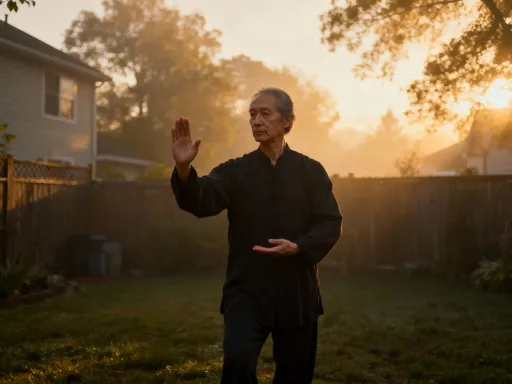
How I Finally Found Calm: Meditation Meets Real-Life Eating Limits
Ever tried meditating while dealing with food rules that feel impossible? I did. For years, my mental noise and dietary restrictions clashed—until I discovered how mindfulness could quietly transform both. It wasn’t magic, just practice. This is the real talk: how meditation helped me stay grounded, make peace with eating limits, and actually enjoy the process. No extremes. No hype. Just what worked—honestly. The journey wasn’t about achieving perfection at the dinner table or mastering stillness in five minutes. It was about learning to coexist with the constant decisions, the social pressures, and the internal voice that whispered guilt when I said no to a shared dessert. What began as a quiet experiment with breath and presence grew into a sustainable way of living—one where food rules no longer ruled my mind.
The Mental Tug-of-War: When Food Rules Fuel Stress
Living with dietary restrictions—whether due to allergies, digestive sensitivities, or doctor-recommended changes—often begins with good intentions. But over time, the mental load can quietly accumulate. Each meal becomes a series of calculations: Is this safe? What’s in it? Will it cause discomfort later? For many women in their 30s to 50s, this responsibility is layered over already full lives—managing family meals, work schedules, and social commitments. The pressure isn’t just physical; it’s emotional. The constant need to say no, to read labels, or to bring your own dish to gatherings can isolate you, even in a crowd. What starts as self-care can slowly morph into a source of anxiety, turning every dining experience into a high-stakes decision.
This mental fatigue is not uncommon, yet it’s rarely discussed. The brain thrives on predictability and ease, but dietary limits introduce uncertainty at every turn. Research in behavioral psychology shows that repeated decision-making, even over small choices, depletes cognitive resources—a phenomenon known as decision fatigue. When you’re constantly filtering food options through a lens of restriction, your mental energy reserves shrink. You may find yourself snapping at a child over a minor issue or feeling unusually drained by mid-afternoon, not from physical exertion, but from the invisible labor of navigating your diet. This isn’t a failure of willpower; it’s a natural response to sustained mental demand.
What makes this cycle especially challenging is how it feeds on itself. Stress can worsen digestive symptoms, which in turn reinforces the need for stricter eating rules. The fear of feeling unwell becomes a motivator, but also a source of hypervigilance. Over time, the relationship with food shifts from nourishment to caution, and meals lose their joy. The irony is that the very rules meant to support health can begin to erode emotional well-being. This is where the conversation needs to expand beyond food lists and into the realm of mental resilience. Because managing dietary limits isn’t just about what’s on the plate—it’s about what’s happening in the mind.
Why Meditation Isn’t Just “Sitting Quietly”
When most people hear “meditation,” they picture someone cross-legged, perfectly still, with a completely blank mind. This image, often reinforced by media, sets an unrealistic standard and discourages many from even trying. The truth is, meditation is not about stopping thoughts. It’s about changing your relationship with them. Think of it as mental fitness: just as lifting weights strengthens muscles, regular meditation strengthens your ability to notice thoughts without reacting to them. This skill—called meta-awareness—is especially valuable when dealing with the emotional weight of dietary restrictions. It allows you to observe the internal chatter—“I shouldn’t eat that,” “Everyone else is indulging,” “I’ll never get this right”—without being pulled into its current.
Scientific studies support this. Neuroimaging research has shown that consistent meditation practice can reduce activity in the default mode network, the brain system linked to mind-wandering and self-referential thoughts—exactly the patterns that fuel rumination and anxiety. A 2011 study published in Psychiatry Research found that participants who completed an eight-week mindfulness-based stress reduction program showed measurable decreases in gray matter density in the amygdala, the brain region associated with fear and emotional reactivity. These changes correlated with lower self-reported stress levels. This isn’t about mystical transformation; it’s about neuroplasticity, the brain’s ability to rewire itself through repeated experience.
For someone managing food limits, this means greater emotional stability when faced with triggering situations—like a birthday party with allergen-laden cake or a holiday meal where your needs feel like an inconvenience. Meditation doesn’t remove the challenge, but it builds a buffer between stimulus and response. Instead of reacting automatically with frustration or guilt, you gain a moment of pause. In that space, you can choose how to respond. This shift is subtle but powerful. It turns dietary management from a battle of willpower into a practice of awareness. Over time, the mental noise doesn’t disappear, but it loses its grip. You begin to realize that you are not your thoughts—and that freedom changes everything.
How I Started: Small Moves, Real Shifts
I didn’t begin meditation with grand ambitions. No retreats, no incense, no hours of silence. I started with five minutes each morning, sitting at my kitchen table while my coffee brewed. I simply focused on my breath—the cool air entering my nostrils, the slight rise of my chest, the warmth of the exhale. Within seconds, my mind would drift: to my to-do list, a work email, the argument I’d had with my teenager the night before. That was normal. The practice wasn’t to stop the thoughts but to notice when I’d wandered and gently return to the breath. At first, I did this only a few times a week, fitting it in when the house was quiet. I didn’t aim for perfection. I didn’t even call it “meditation” at first—just “quiet time.”
The early days were marked by skepticism. I wondered if I was wasting time I could have spent folding laundry or answering messages. I worried I was “doing it wrong” because my mind never fully settled. But I kept going, not because I felt transformed, but because the act itself felt like a small act of self-kindness. Over time, something shifted. I began to notice subtle changes: I was less reactive when plans changed, more patient when my child spilled juice on the carpet. These weren’t dramatic breakthroughs, but they were real. The mental “muscle” I was building—attention, awareness, gentle redirection—started showing up in daily life, especially around food.
One morning, I realized I had paused before reaching for a snack, not because I was counting calories, but because I noticed I wasn’t actually hungry. That moment of awareness felt like a quiet victory. It wasn’t about discipline; it was about presence. I hadn’t forced myself to stop—I had simply seen the impulse and chosen differently. That’s when I understood the power of consistency over intensity. Five minutes a day, done regularly, was more effective than an hour once a month. The practice didn’t demand more than I could give. It met me where I was, in the chaos of real life, and offered a small anchor of calm. That’s what made it sustainable.
Mindful Eating as a Side Effect (Not the Goal)
One of the most unexpected benefits of my meditation practice was how it quietly improved my relationship with food—without me trying to change my eating habits directly. Mindful eating wasn’t my goal, but it became a natural byproduct of increased awareness. I began to notice the texture of my food, the layers of flavor, the way my body responded as I ate. I chewed more slowly. I put my fork down between bites. I started to recognize the subtle signal of fullness before I felt uncomfortably full. These changes didn’t come from a diet plan or a strict rule; they emerged from a deeper presence at the table.
This shift was especially helpful when navigating my dietary limits. Instead of eating on autopilot and later realizing I’d consumed something that didn’t agree with me, I became more attentive to each choice. I read labels more carefully, not out of fear, but out of care. I asked questions at restaurants with more confidence, not as an inconvenience, but as part of honoring my needs. The difference was in the mindset: I wasn’t depriving myself; I was choosing what supported my well-being. This subtle reframe reduced the internal conflict that had once made meals stressful.
Importantly, the goal was never weight loss or “perfect” eating. It was about reducing the mental noise around food. When you’re no longer caught in a cycle of guilt and restriction, eating becomes less charged. You can enjoy a safe, nourishing meal without wondering if you’re doing it “right.” You can attend a gathering and participate without feeling like an outsider. Mindful eating, in this context, isn’t about eating slowly for the sake of it—it’s about bringing awareness to a process that so deeply affects your physical and emotional state. And when that awareness grows, so does your sense of agency. You’re no longer reacting to food; you’re engaging with it, making choices that align with your values and health needs.
When Cravings Hit: Using Awareness Instead of Willpower
Cravings are a normal part of the human experience, especially when living with dietary restrictions. The smell of fresh bread, the sight of a chocolate bar at the checkout—these triggers can spark an intense urge, even when you know the food isn’t safe or supportive. In the past, I responded in one of two ways: giving in and feeling guilty, or resisting with sheer willpower and feeling deprived. Both approaches left me drained. What meditation taught me was a third way: awareness. Instead of fighting the craving, I learned to observe it—its physical sensation, its emotional root, its fleeting nature.
The craving cycle typically follows a pattern: a trigger (like a sight or smell), followed by an urge (a strong desire to eat), and then action (eating or not eating). Meditation creates space between the urge and the action. When a craving arises, I now pause and take three slow breaths. In that moment, I notice where I feel the urge in my body—is it in my throat? My stomach? I ask myself, Am I truly hungry, or is this emotional? Often, the craving loses its intensity within a minute or two. It’s not about suppressing the desire; it’s about not letting it drive the car. This practice doesn’t eliminate cravings, but it changes your relationship with them. You begin to see them as temporary mental events, not commands that must be obeyed.
This shift is crucial for long-term adherence to dietary limits. Willpower is a limited resource, but awareness is renewable. When you rely on discipline alone, you’re bound to reach a point of restriction fatigue—especially during times of stress or emotional upheaval. But when you cultivate the ability to pause and observe, you respond from a place of clarity, not depletion. You can say no to a food not because you “can’t” have it, but because you “choose” not to. That distinction may seem small, but it’s empowering. It turns restriction from a source of resentment into an act of self-respect. And that makes all the difference in sustaining change over time.
Building a No-Pressure Routine That Sticks
Sustainability is the key to any lasting habit, and meditation is no exception. The most effective routines aren’t built on motivation, which fades, but on integration—tying the practice to something you already do every day. For me, that anchor was my morning coffee ritual. After brushing my teeth, before turning on my phone, I sat for five minutes with my breath. On busy days, I shortened it to two minutes. On days I forgot, I simply began again the next day—no guilt, no self-criticism. This flexibility was essential. The goal wasn’t perfection; it was consistency. Over time, the habit became automatic, like brushing my teeth or locking the door at night.
There are many ways to build this kind of routine. Some find it helpful to meditate after dinner, using a body scan to release the day’s tension. Others prefer a brief session before bed to quiet the mind for sleep. The timing matters less than the regularity. Free tools, such as guided meditation apps or online audio tracks, can support beginners, but they aren’t necessary. Silence is enough. What matters is showing up, even for a few breaths. It’s also important to let go of all-or-nothing thinking. Missing a day doesn’t erase progress. In fact, the ability to return without judgment is itself a form of mindfulness. This gentle, non-punitive approach makes the practice sustainable, especially for women juggling multiple roles and responsibilities.
Another key to success is managing expectations. Meditation won’t solve every problem or eliminate all stress. But it builds a foundation of calm that makes challenges easier to navigate. It’s like strengthening a muscle—you may not notice changes day to day, but over weeks and months, the difference becomes clear. The goal isn’t to achieve a particular state of mind, but to show up for yourself, consistently and kindly. When the practice feels like a gift rather than a chore, it lasts. And when it lasts, it transforms.
Beyond the Cushion: Lasting Calm in a Food-Complex World
Years into my meditation practice, the changes go beyond the moments I spend sitting quietly. The calm I cultivate doesn’t stay on the cushion—it spills into my days. I carry it into grocery stores, family dinners, and social events where food is central. I still have dietary limits. I still encounter foods I can’t eat. But the emotional weight has lifted. There’s less guilt, less frustration, more acceptance. I’ve learned to hold my boundaries with grace, not rigidity. I can say no without apology, and yes without fear. This isn’t because the world has changed—it’s because my relationship with it has.
Meditation hasn’t fixed everything. There are still days when stress runs high or cravings feel overwhelming. But now I have a tool that helps me navigate those moments with greater clarity and compassion. I don’t expect perfection, and I don’t demand it of myself. The practice has taught me that progress isn’t linear, and that’s okay. What matters is the direction—the slow, steady movement toward greater awareness, kindness, and balance. In the context of dietary restrictions, this means eating not out of fear or obligation, but out of care and choice.
Ultimately, mindfulness is not a solution to be mastered, but a relationship to be nurtured. It’s a quiet, ongoing act of self-respect—one that becomes especially valuable when life requires you to eat differently. In a world that often equates food with pleasure, celebration, and connection, holding your own needs can feel isolating. But through meditation, you learn that you are not alone in your body. You are present. And in that presence, there is peace. Not a loud, dramatic peace, but a steady, quiet one—the kind that lets you sit at the table, enjoy what you can, and let go of what you can’t, with grace.