How I Found Balance Through Qigong After Injury – A Real Healing Journey
After a long recovery from a physical setback, I felt stuck—low energy, stiff body, and constant frustration. That’s when I turned to qigong, not as a cure, but as a way to reconnect with my body. What started as gentle morning movements slowly transformed my rehabilitation experience. It wasn’t magic, just consistent practice. This is how qigong became part of my healing—and why it might help others too. More than a set of exercises, it became a daily ritual of patience, awareness, and gentle restoration. In time, it reshaped not only how I moved but how I thought about healing itself.
The Breaking Point: When Recovery Felt Impossible
It began with a fall—nothing dramatic, but enough to cause a ligament tear in my knee. What followed was months of physical therapy, prescribed exercises, and cautious walking. At first, progress was encouraging. But after about three months, I plateaued. My range of motion didn’t improve. My muscles remained tight, especially in the lower back and hips, and I felt a persistent heaviness in my limbs. Fatigue clung to me like a second skin, even after a full night’s sleep. I could walk without pain, but I couldn’t garden, climb stairs without effort, or play with my grandchildren the way I used to.
Emotionally, the stagnation was harder than the physical pain. I began to question whether I’d ever feel truly well again. I was doing everything “right”—attending appointments, following instructions, avoiding overexertion—yet I wasn’t moving forward. The frustration built into a quiet despair. I missed the simple joy of moving freely. I felt disconnected from my body, as if it had betrayed me. The mirror reflected someone who looked fine, but inside, I felt broken and impatient.
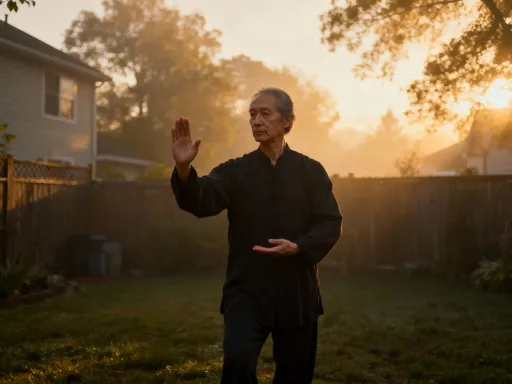
It was during one particularly discouraging week that I stumbled upon a short video of a woman doing qigong in a park. Her movements were slow, deliberate, almost floating. She wasn’t stretching or strengthening in the way I associated with rehab, yet there was a grace and ease in her posture that caught my attention. I watched her breathe deeply as she shifted weight from one foot to the other, arms rising like wings. Something about it felt calming, even through the screen. I didn’t expect much, but I was out of options. I decided to try it—not as a replacement for medical care, but as a gentle companion to it.
What Exactly Is Qigong? (And Why It’s Not Just “Slow Movements”)
Qigong (pronounced “chee-gong”) is an ancient practice rooted in Traditional Chinese Medicine, with a history spanning thousands of years. The word itself combines “qi,” meaning vital energy or life force, and “gong,” meaning skill or cultivation. Together, qigong translates to “cultivating energy.” But this isn’t mystical or esoteric. At its core, qigong is a system of coordinated body posture, movement, breathing, and focused intention designed to support health, prevent illness, and enhance overall well-being.
Unlike high-intensity workouts or even standard physical therapy routines, qigong operates on subtlety. It doesn’t aim to build muscle or burn calories. Instead, it works with the body’s internal systems—circulatory, nervous, and energetic—to restore balance. Practitioners believe that when qi flows smoothly through the body’s meridians (energy pathways), health is maintained. When the flow is blocked or disrupted—due to injury, stress, or inactivity—discomfort and illness can arise. Qigong helps clear these blockages not through force, but through rhythm, awareness, and gentle motion.
Modern science doesn’t always use the term “qi,” but research supports many of qigong’s mechanisms. Studies have shown that regular practice can reduce markers of inflammation, improve heart rate variability (a sign of nervous system balance), and enhance proprioception—the body’s sense of its own position in space. These benefits are especially valuable during recovery, when the nervous system is often in a state of heightened alert due to pain or immobility. Qigong helps shift the body from “fight-or-flight” to “rest-and-digest,” creating a physiological environment where healing can thrive.
Why Qigong Fits Perfectly Into Rehabilitation
One of the greatest challenges in rehabilitation is avoiding re-injury while still promoting movement. Traditional exercises often require a certain threshold of strength or flexibility, which can be intimidating or even harmful when the body is still fragile. Qigong, by contrast, meets the body where it is. Its movements are low-impact, adaptable, and emphasize quality over quantity. This makes it an ideal complement to conventional rehab, especially for those recovering from joint injuries, chronic pain, or post-surgical conditions.
The practice supports recovery in several measurable ways. First, gentle, rhythmic motion encourages blood circulation without straining healing tissues. Improved circulation delivers oxygen and nutrients to injured areas while helping remove metabolic waste—a key factor in reducing inflammation and speeding tissue repair. Second, qigong’s focus on diaphragmatic breathing activates the parasympathetic nervous system. This lowers cortisol levels, reduces muscle tension, and improves sleep quality—all of which are critical for recovery.
Additionally, qigong enhances body awareness. After an injury, people often guard or avoid using the affected area, leading to compensatory patterns—using the other leg more, shifting posture, or tensing shoulders unconsciously. These adaptations can create new imbalances over time. Qigong helps reestablish neural connections between the brain and body, encouraging more balanced, coordinated movement. Over time, this mindful re-education reduces strain on healthy joints and muscles, supporting long-term recovery.
My First 7 Days: What I Actually Did (And How I Felt)
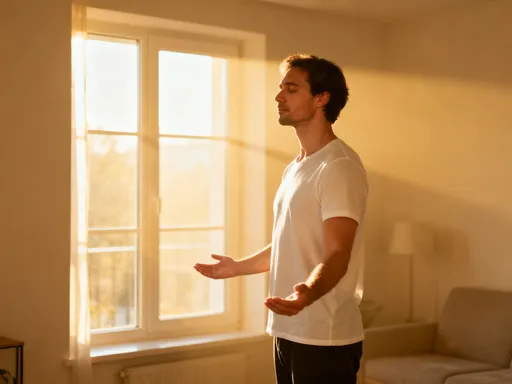
I started with a basic routine from a reputable online course designed for beginners and those with physical limitations. Each session lasted about ten minutes and included three core elements: standing meditation, abdominal breathing, and simple joint mobilization. I practiced first thing in the morning, before coffee, in a quiet corner of my living room. I wore comfortable clothes and stood barefoot on a yoga mat.
Day one was awkward. Standing still with my feet shoulder-width apart, knees slightly bent, arms rounded in front of me like holding a beach ball—I felt silly. My mind raced. I worried about doing it “right.” I noticed how hard it was to keep my shoulders relaxed. By the end, I didn’t feel different—except maybe a little lightheaded from focusing too hard on my breath. But I committed to seven days, no matter what.
By day three, something shifted. I began to notice subtle sensations: warmth in my palms, a slight tingling in my fingertips. My breathing deepened naturally. I wasn’t trying to relax—I was allowing it. On day five, I caught myself smiling during the practice. The movements felt less mechanical, more fluid. I started to enjoy the stillness, the quiet focus. Most surprisingly, I began sleeping better. I wasn’t falling asleep faster, but my sleep felt deeper, more restorative. By day seven, I noticed I wasn’t gripping the railing as tightly when I climbed the stairs. My body felt a bit looser, as if something had gently unwound.
Building a Routine: How I Integrated Qigong Into Daily Life
Consistency was the real challenge—not the practice itself. Life happens: family needs, household chores, unexpected obligations. There were days I wanted to skip it. But I learned that even five minutes was better than nothing. To make it stick, I used habit stacking—a technique where you attach a new behavior to an existing one. I paired qigong with my morning coffee ritual. I’d do my practice first, then brew my coffee. That small sequence—stand, breathe, move, then reward—created a natural rhythm.
I also set a gentle reminder on my phone, not with a loud alarm, but a soft chime labeled “Breathe.” If I missed the morning, I’d do a shortened version after dinner. I found evening practice helped me unwind and eased the stiffness that often built up during the day. I experimented with different forms—some days I did seated qigong if my knee was sore; other days I added a flowing sequence called “The Eight Brocades,” which included gentle stretches and weight shifts.
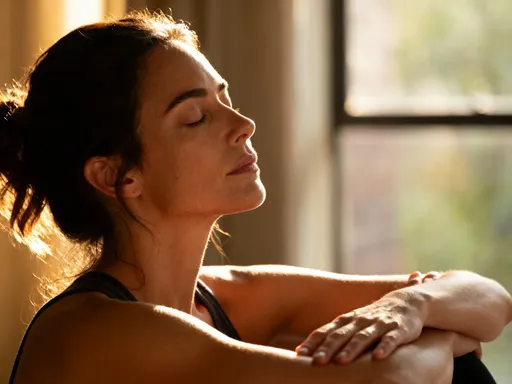
Over time, I increased my sessions from ten to twenty minutes. I didn’t push for longer—I simply allowed the practice to grow as my comfort increased. I also found that practicing near a window, with natural light and the sound of birds, deepened the experience. The key wasn’t perfection; it was showing up. On tough days, I reminded myself that healing isn’t linear. Some days I felt energized; others, I just stood and breathed. And that was enough.
Beyond the Body: The Mental and Emotional Shifts I Didn’t Expect
The physical changes were welcome, but the emotional shifts were transformative. I began to notice a quieting of my inner critic. Before qigong, I’d constantly compare myself to how I used to be—stronger, faster, more capable. That comparison bred frustration and impatience. But through qigong, I learned to meet myself as I was in the moment. The practice taught me to observe without judgment: tightness in the hip? Notice it. A racing mind? Acknowledge it. Then return to the breath.
This non-judgmental awareness began to spill into other areas of life. I became less reactive. When my grandson spilled juice on the rug, I didn’t snap—I took a breath and cleaned it up calmly. I started to appreciate small victories: bending down to tie my shoe without wincing, standing in the garden for twenty minutes without needing to sit. These weren’t dramatic milestones, but they mattered.
Qigong also helped me process the emotional residue of injury—the fear of falling again, the anxiety about long-term limitations. By focusing inward, I created space between stimulus and response. Instead of reacting with fear when my knee ached, I’d pause, breathe, and assess: was this pain a warning, or just stiffness? That pause made all the difference. I wasn’t just healing my body; I was rebuilding my relationship with it—one breath at a time.
Important Notes: When to Seek Professional Guidance
It’s essential to emphasize that qigong is not a substitute for medical treatment. It should be viewed as a supportive practice, not a cure. Before starting any new wellness routine, especially after an injury, it’s crucial to consult with a healthcare provider. This is particularly important if you have conditions like osteoporosis, balance issues, or cardiovascular concerns, which may require modifications.
Working with a certified qigong instructor can also make a significant difference. While online videos and apps are accessible, they can’t correct your alignment or tailor movements to your specific needs. A trained teacher can help ensure you’re practicing safely, using proper form, and progressing at a pace that supports healing. They can also guide you in choosing practices appropriate for your condition—some forms are more dynamic, others more meditative.
One of the core principles of qigong is “no pain, no strain.” If you feel sharp pain, dizziness, or increased discomfort during or after practice, stop and reassess. The goal is gentle nourishment, not exertion. Pushing through pain can lead to setbacks. Listen to your body. Respect its limits. Healing is not a race; it’s a process of reconnection and restoration.
Qigong didn’t fix me overnight, but it gave me tools to participate actively in my recovery. It taught me to listen, breathe, and move with intention. For anyone rebuilding strength after injury, this ancient practice might just be the missing piece—not as a miracle, but as a mindful companion on the long road back. It’s not about returning to who you were, but discovering who you can become through patience, presence, and gentle persistence. In the quiet moments of practice, I found not just healing, but hope.